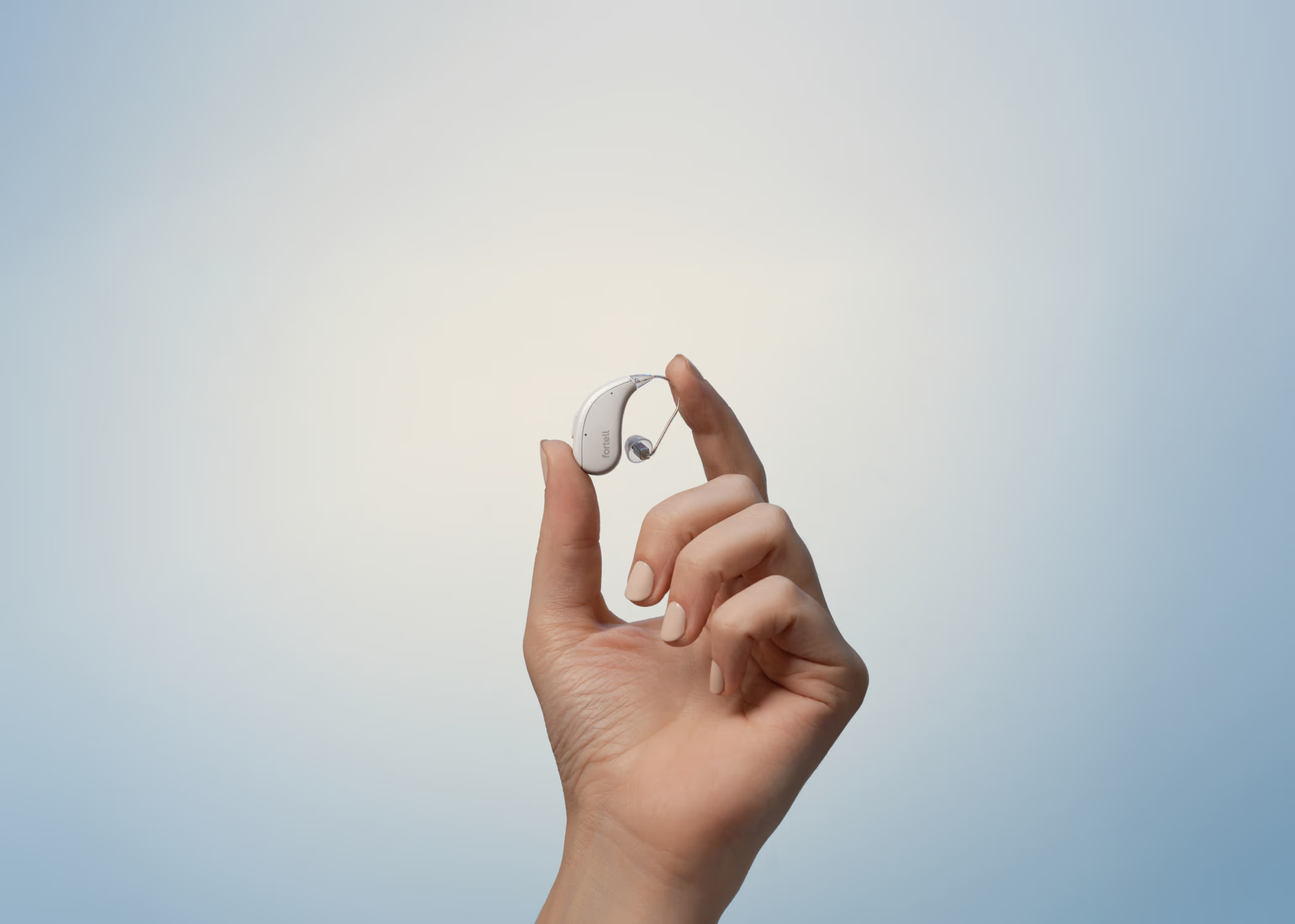
In April 2025 I joined Fortell, a startup building AI-powered hearing aids trained to boost speech in noisy environments. The company was building something exciting — custom silicon paired with a modern AI approach to a widespread and poorly addressed health problem. In January 2026 Fortell launched publicly, opened its first clinic on Park Avenue, and started selling hearing aids!
The Cocktail Party Problem
Most hearing aids amplify everything — speech, clatter, music, traffic — and leave your brain to sort it out. That cognitive load is why noisy restaurants and crowded rooms remain so exhausting even with top-of-the-line devices. Fortell takes a different approach: instead of boosting all sound, a Spatial AI model performs real-time source separation, isolating the speaker in front of you while attenuating competing voices and background noise from all directions.
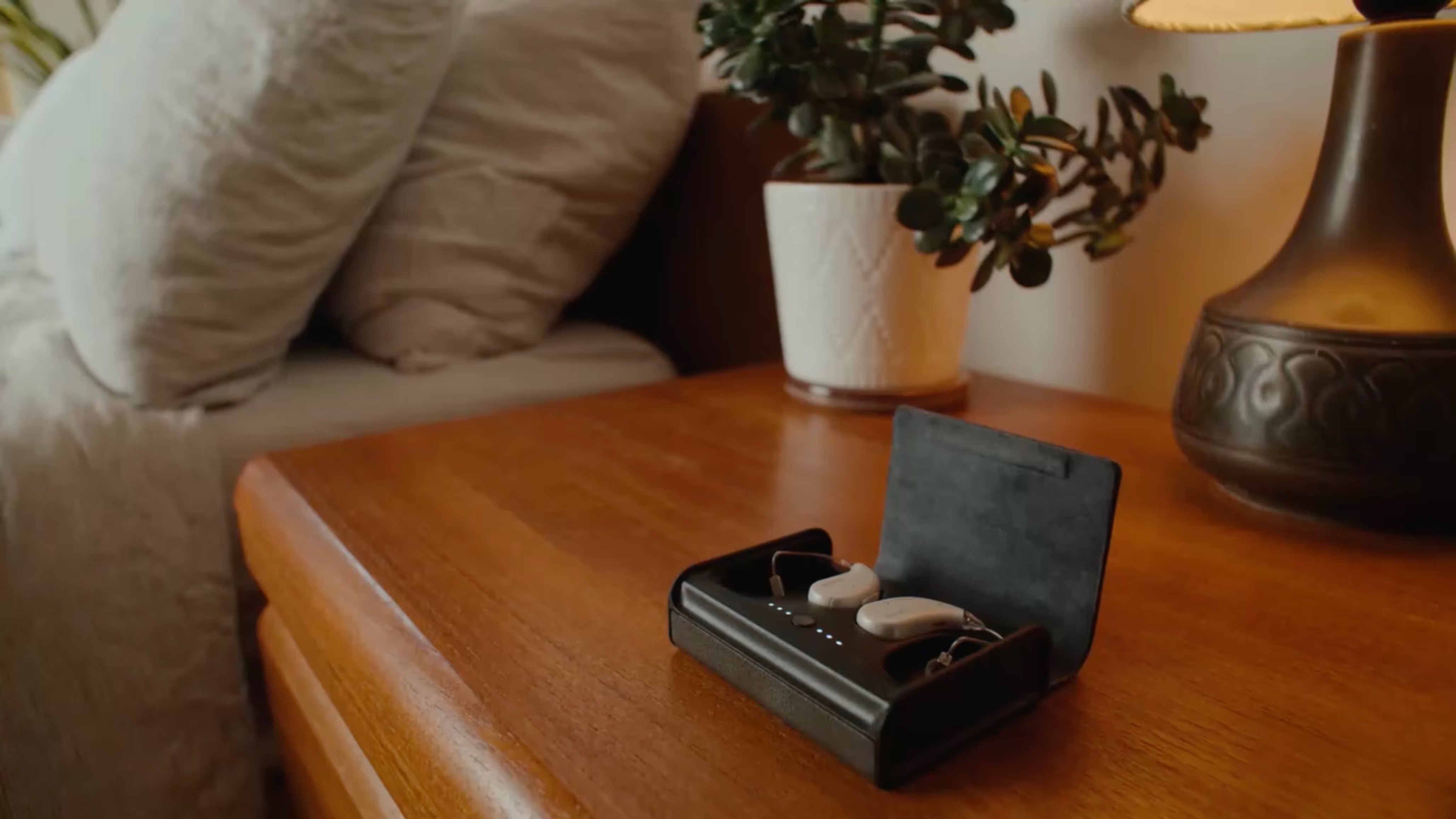
AI, Not Amplification
Where most “AI-powered” hearing aids run tiny scene-classification neural networks to tweak the parameters of a legacy signal-processing pipeline, Fortell deploys a large source-separation model that actively reconstructs the audio scene. The model recognizes the aural fingerprint of the speaker in front of you, identifies competing talkers, and detects non-speech noise omnidirectionally — all in real time. A purpose-built chip with 235x more compute than leading competitors makes it possible to run this model on-device with 18+ hours of battery life.
Clinical Results
Two peer-reviewed studies back up the approach. In a double-blind randomized controlled trial with 30 hearing aid users, Fortell achieved a 9.2 dB signal-to-noise ratio improvement versus 3.1 dB for the leading competitor — translating to roughly 19x higher odds of understanding words correctly. In a separate A/B preference study against five major manufacturers’ top models, 95% of participants preferred Fortell.